
Gallery wall layout ideas for small prints
Wall art and framing · 2026-10-15
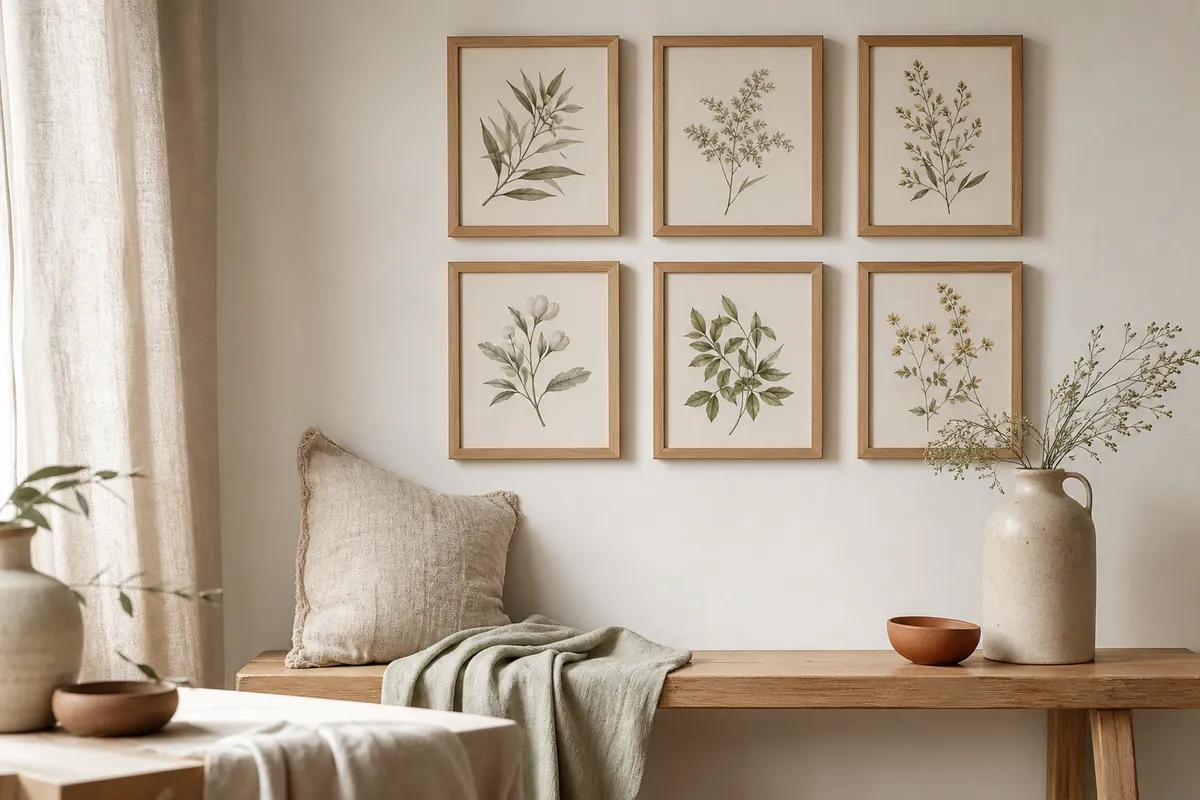
A gallery wall can look effortless, but the best ones are planned. The secret is consistent spacing, a clear shape and a mix of sizes that feels related. Here are four layouts that work with framed prints, and a method for hanging them without extra holes.
Before you start
Choose your anchor. This is usually the biggest print or the one with the strongest colour. Then decide how wide the arrangement should be. A good guide is about two thirds of the furniture below it, which is covered in our wall art size guide.
Keep to one or two frame colours. Our prints come in natural oak or black, so you can mix them deliberately or keep them matching.
Layout 1: the grid
A grid is the easiest layout, and it works well with prints of the same size. Hang two rows of three A4 prints, or two columns of 30 x 40 cm prints. Keep 5 to 8 cm between frames and align every edge.
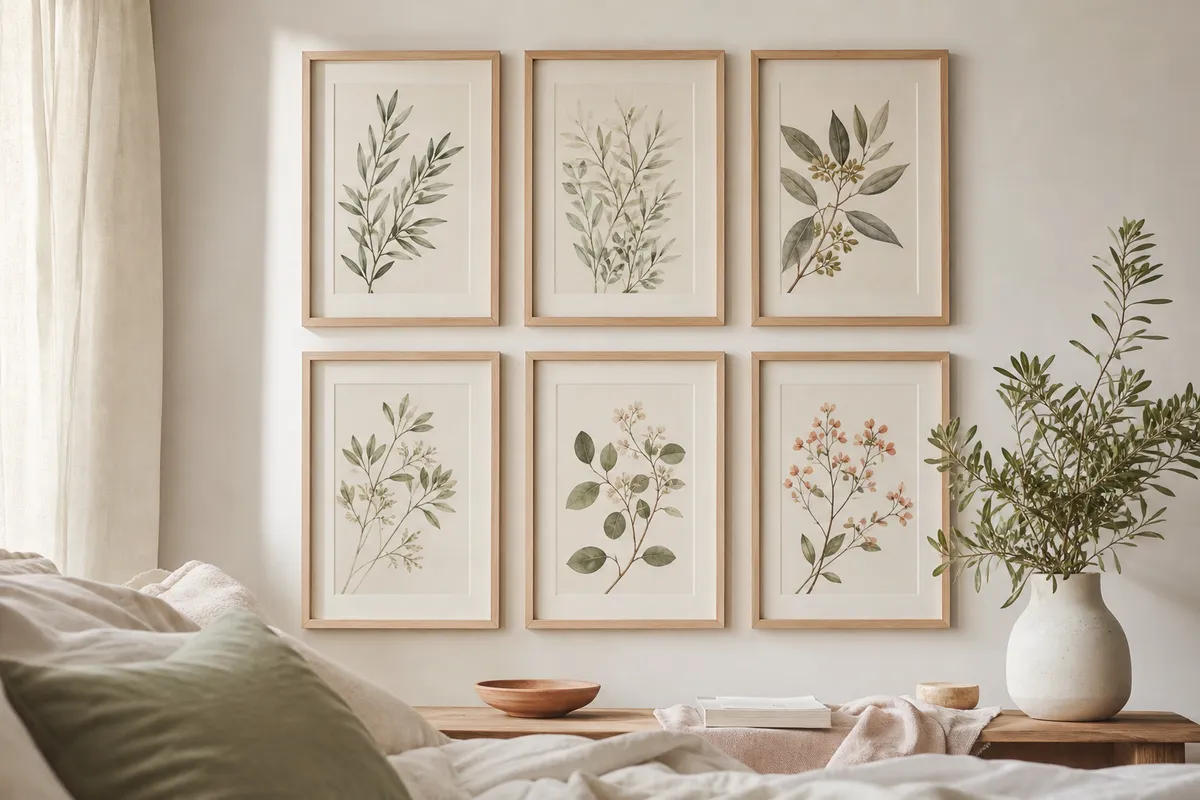
It suits calm subjects such as botanicals. Try the Banksia Botanical print with two neighbours in a similar palette.
Layout 2: the anchor and satellites
Place one large print, such as a 50 x 70 cm, in the centre, then hang two or three smaller prints on one side. Align the top or bottom edge of the small prints with the large frame. This layout feels relaxed and works well above a sofa. See styling art above a sofa for height guidance.
Layout 3: the row
A single row of three or four frames makes a clean line above a bed, a console or a bench. Mix sizes if you like, but align the centre line. Morning Ritual and Tea by the Coast make a lovely pair in a kitchen.
Layout 4: the staircase
Hang the prints on a diagonal that follows the stairs, keeping the same gap from the stair line. Use consistent frames to avoid chaos, and measure from the steps rather than the ceiling.
Plan it on the floor first
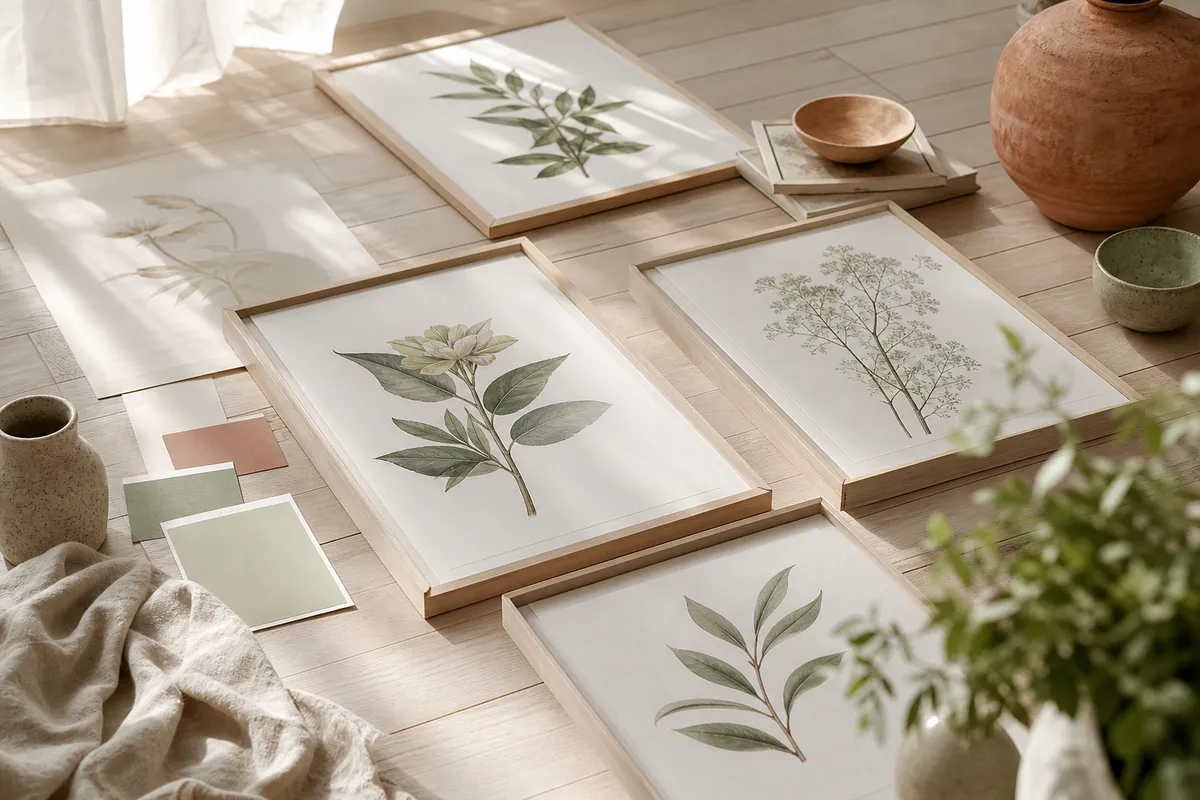
Lay the frames on the floor in the arrangement you like. Take a photo. Then trace each frame on paper, cut it out and tape the paper shapes to the wall with masking tape. Move them around until the spacing feels right. This avoids extra holes.
Getting the height right
Aim for the centre of the whole group to sit at about 145 cm from the floor. Above furniture, leave 15 to 25 cm between the furniture and the bottom of the lowest frame.
Mistakes to avoid
- Spacing that varies from frame to frame.
- Hanging too high. Lower is usually better.
- Mixing too many colours and frame types.
- Skipping the paper template step.
Add something that is not a print
A small ceramic piece or a plant on a nearby shelf makes the wall feel more lived in. For botanical looks, see how to style botanical prints. Our framed art prints come in A4, 30 x 40 cm and 50 x 70 cm, so you can build a group over time.
How to order
Prints are printed to order in Australia. Production takes 3 to 7 business days and delivery 2 to 5 business days. Shipping is a flat A$12.95, free over A$150, so ordering a group in one go saves on postage.
Mixing frame colours
Our frames come in natural oak and black. A mix can look intentional if you balance them: for example, two oak frames and one black in a row, or a black frame in the centre with oak on either side. Keep the same frame colour for prints that sit very close together.
Choosing prints that belong together
Choose prints with a shared palette. Warm ochres and soft greens, like our banksia and tea prints, sit well together, and they suit natural timber walls and floors. Subject variety is fine, but colour variety is harder to manage. Group by colour first and subject second.
Frequently asked questions
How far apart should frames be on a gallery wall?
About 5 to 8 cm between frames is a good rule, kept the same across the whole group.
How many prints do I need for a gallery wall?
Three is enough to start. Odd numbers often look balanced, and you can add more later.